New Patients
(941) 203-4247
Current Patients
(941) 922-0671


Hearing that a tooth needs a root canal can feel worrying, but you can relax. These days, the treatment is routine and about as comfortable as getting a dental filling. Root canal therapy is often the best way to ease toothache pain, rescue a damaged tooth, and keep your natural smile.
At Munton Dental Studio in Sarasota, we use the latest technology to give precise, gentle care that helps patients keep their smiles healthy and beautiful. Your comfort and well-being come first with us, so you can feel confident that your oral health is in good hands.
Root canal treatment has a demonstrated success rate of well over 90%. It remains the most effective way to save a tooth that has been badly weakened by decay or injury. A healthy set of natural teeth supports both your mouth and your overall well-being, so dentists widely recommend a root canal over removing the tooth.
The procedure is extremely common. In the United States alone, dentists perform almost 41,000 root canals every day, which adds up to close to 15 million each year.

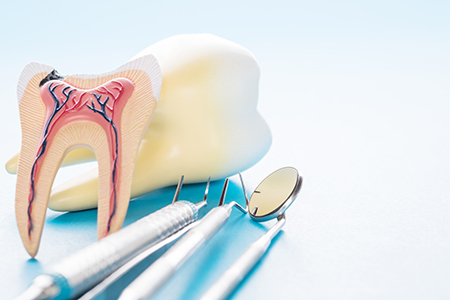
A tooth is more than its hard outer surface and roots. At its center is a chamber filled with connective tissue, nerves, and blood vessels. Together, these inner tissues are called the dental pulp. The pulp helps a tooth grow and mature before it comes into the mouth. After that, it keeps the tooth nourished and alive, and it lets you know when something is wrong.
Sensitivity when you bite, eat, or drink something hot or cold is a signal from the nerves inside your tooth. It may mean decay is present, the tooth has been injured, or an infection is developing. How much pain you feel depends on how far the damage has spread and how much the nerve is affected.
A root canal becomes necessary when the pulp is damaged beyond repair or has died. The good news is that if enough healthy tooth structure remains and the surrounding bone is strong, the tooth does not have to come out. A fully developed tooth can keep working without its pulp, so your dentist can save it with a root canal instead of an extraction.
Not every toothache means you need a root canal. Still, these warning signs suggest the treatment may be needed:
Pain tells you something is wrong. Mouth pain has many possible causes, but one of the most common is a toothache from decay or damage that has reached the living tissue inside the tooth. People who need a root canal often say the pain wakes them at night.
If a hot drink or warm meal makes you wince instead of enjoying it, please call our office. Strong sensitivity to hot or cold can point to pulp that is inflamed, irritated, or no longer alive.
Pain when you bite, chew, or simply touch the tooth may mean the pulp is involved, the inner tissues are permanently damaged, or an infection is present.
A tooth that changes color is often a sign that its nerve and blood supply have been harmed. After an injury, a tooth may darken as the tissues inside lose their vitality.
An injury that chips or breaks a tooth can also harm the pulp. It may even remove so much of the tooth that a root canal is needed to save it.
Swelling in the gums near a tooth can mean an infection has formed. The swelling may grow and cause more harm, or an abscess may begin to leak pus and drain. Either way, you need care right away. Our emergency treatment page explains how we help with urgent problems.
The problems that lead to a root canal can damage the bone that holds a tooth in place, causing it to feel loose. Root canal therapy can often correct this as the tissues heal.

Some of the signs above can point to other dental problems, but each one deserves a quick evaluation and treatment. Sometimes a tooth that needs a root canal causes no obvious symptoms at all. We may first spot it during a comprehensive, routine exam. These teeth usually show signs on X-rays of periapical pathology (problems at the tip of the root) or other structural damage.
If we recommend a root canal, it is important not to wait. Putting off treatment raises the chance of more severe and widespread symptoms. A dental infection can seriously affect your oral health and may even put your overall health at risk.
Thanks to modern instruments and advanced techniques, a non-surgical root canal is often as comfortable as a routine filling.
Some root canals are finished in a single visit, while others take 2 or 3 appointments. The timeline depends on how many canals the tooth has, its shape, and whether there is an active infection.
During treatment, our dentist removes the diseased pulp, cleans the inside of the tooth, and fills each prepared canal with a biocompatible material. We usually perform root canals with local anesthesia. If dental visits make you anxious, ask about dental sedation options that can help you feel more at ease.
At Munton Dental Studio, your care and comfort are our top priorities. We want you to enjoy excellent oral health and to understand each step of your treatment.
Here is what you may notice after your root canal:
Right after your visit, your mouth may stay numb for a while. Feeling usually comes back within an hour or two. Until it does, take care not to accidentally bite or hurt your lips, cheeks, gums, or tongue. Be careful when chewing, drinking hot drinks, or smoking.
A root canal relieves toothache pain, but once the anesthesia wears off you may feel mild to moderate soreness. This should ease within a few days. To keep extra pressure off the tooth, we may smooth its biting surface slightly so it does not touch the opposing teeth. We will also suggest suitable over-the-counter pain relievers and give you a prescription if needed.
If you receive antibiotics to treat or prevent infection, take the full course exactly as prescribed.
Even with a temporary filling, a tooth that has had a root canal can break under stress until a permanent crown or other lasting restoration is in place. Until then, chew on the other side of your mouth and avoid hard or sticky foods.
Be gentle with the treated tooth, but keep up your normal brushing and flossing. Good daily hygiene helps prevent new problems, supports healing, and keeps your whole mouth healthy.
A tooth treated with a root canal needs a permanent crown or other suitable restoration to regain its strength. Until then, what remains of the tooth is fragile and can fracture. The sooner the final restoration is placed, the sooner you can bite and chew comfortably again. Learn more about crowns and caps.
With good care and regular upkeep, a tooth treated with a root canal can last a lifetime.
At Munton Dental Studio, we are committed to the highest quality care for our Sarasota patients. If you have questions, ongoing discomfort, signs of infection, or any other concerns after your procedure, please contact our office for prompt attention. Ready to have a painful tooth checked? Request an appointment today.
Most patients are surprised by how comfortable a root canal feels. Treatment is done with local anesthesia, so the tooth and surrounding area are numb while your dentist works. Many people say it feels much like getting a filling.
In fact, a root canal usually relieves the pain caused by an inflamed or infected tooth. If you feel nervous about dental visits, ask our team about sedation options that can help you relax.
Waiting can allow damage or infection inside the tooth to spread. Symptoms may become more severe, swelling or an abscess can develop, and the bone around the tooth may be affected. Over time, the tooth may become too damaged to save.
A dental infection can also affect your overall health, so if a root canal has been recommended, it is best to schedule treatment promptly.
When a tooth can be saved, dentists widely recommend keeping it. Your natural tooth helps you chew comfortably, supports nearby teeth, and preserves your smile. Root canal treatment has a success rate of well over 90%, and with good care a treated tooth can last a lifetime.
Your dentist will check whether enough healthy tooth structure and strong surrounding bone remain to make a root canal the right choice for you.
The cost depends on several factors, including:
After examining your tooth, our team can explain your treatment plan and expected costs before you begin.
Wait until the numbness wears off before eating so you do not bite your cheek, lip, or tongue. Until your permanent crown or restoration is placed, chew on the opposite side of your mouth and avoid hard or sticky foods, since the treated tooth can break more easily.
Once the final restoration is in place, you should be able to bite and chew comfortably again.